In the wake of Alessandro de’ Medici’s assassination, the Medici family’s country cousin Cosimo becomes the new duke. Right away, he has to fight for his throne and prove that he is no pawn.

In the wake of Alessandro de’ Medici’s assassination, the Medici family’s country cousin Cosimo becomes the new duke. Right away, he has to fight for his throne and prove that he is no pawn.
The Wars of Religion reaches its crescendo with a three-way struggle, and Catherine watches as her most beloved child makes a horrific and bloody mistake that would prove too much for her to bear.


Support the podcast on Patreon. You can also drop some change in the tip jar by going to the Contact/Donate page and see my other work here.
Henri tries to get comfortable as king surrounded by his minions and scholars while Catherine’s problem son, François d’Alençon, helps cause the Wars of Religion to break out again.


Support the podcast on Patreon. You can also drop some change in the tip jar and see my other work here.
With an atrocity between them, Catherine de’ Medici’s relationship with her son King Charles IX falls apart. She can take pride in her favorite son Henri’s election as King of Poland and Grand Duke of Lithuania, although unfortunately her beloved child decides he hates his new job.


Catherine de’ Medici and King Charles IX lash out against perceived enemies only to release a horror beyond their control, one that will stain Catherine’s image forever.

Catherine seems to have finally ended the religious civil war, a lasting peace that would be sealed with the marriage of her glamorous daughter Margot and the Protestant great hope Henri de Bourbon. But no one saw the storm that was coming…


The war between Catholics and Protestants in France finally erupts in earnest. Catherine travels across France with Charles IX to try to calm the volcano, but her own patience with the increasingly desperate Protestants is wearing thin…


So a word of warning, the French Wars of Religion are one of the most complicated events in the history of Europe, if not the history of the world. There were multiple factions, power plays, and, of course, lots of battles at play. Also something I should have noted is that historians don’t even agree about when the wars started, although the majority agree that it began with the Massacre of Wassy. So while it’s hard to avoid a lot of narrative involving the Wars because, well, Catherine de’ Medici ruled France for most of the wars’ duration, I’m going to try to simplify things and leave out detailed descriptions of certain phases of the war and certain players in events, and focus on Catherine and her family. Since you’re listening to the Medici Podcast and not the French History podcast or a war history podcast, I doubt this makes you too unhappy.
(more…)Catherine de’ Medici takes the reins under the novel title of Governess of France. Just as she assumes power, a crisis that will overshadow the rest of her life begins to take shape.
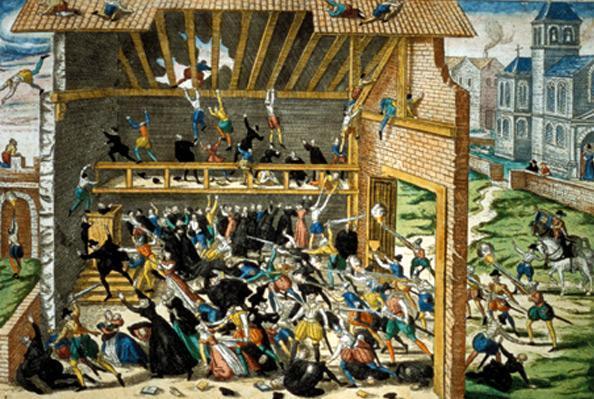
Because it’s been a while, let me remind you of where we are in our story. King Francois II, son of Catherine de’ Medici and King Henri II of France, has died from an agonizing illness. Catherine’s next oldest son Charles-Maximilien had to come to the throne, regardless of his age. The king is dead, long live the king, as the old French saying goes. Only ten years old, Charles-Maximilien was crowned as King Charles IX. However, the real ruler of France was no one other than Catherine. The three men most likely to successfully challenge her claim as the queen regent, the Duc and Cardinal de Guise and Antoine de Bourbon, had all been neutralized. The Guise brothers agreed not to stake a claim on the regency in exchange for King Francois taking the blame off their shoulders for certain illegalities at the trial of Antoine’s troublesome brother, Louis, the Prince de Condé. As for Antoine, the fact his brother was convicted of being involved in a conspiracy to kidnap King Francois made him vulnerable enough for Catherine to bring him to heel. But Catherine was smart enough to use the carrot along with the stick. She had Condé freed from prison and granted Antoine the important post of Lieutenant General of France. For the Guises, she confirmed the Duke of Guise’s position as a general of the French army. The year before Charles IX’s ascension, Catherine had also married her daughter Claude to the Guises’ cousin, Duke Charles III of Lorraine.
(more…)Catherine de’ Medici’s chronically ill son is now King François II of France. Rather than getting to enjoy the perks of being a king’s mother, she finds herself caught having to deal with not only the growing tensions between Catholic and Huguenot, but the feud between two powerful families, the Guises and the Bourbons.
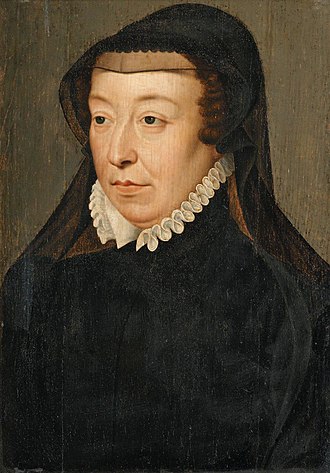


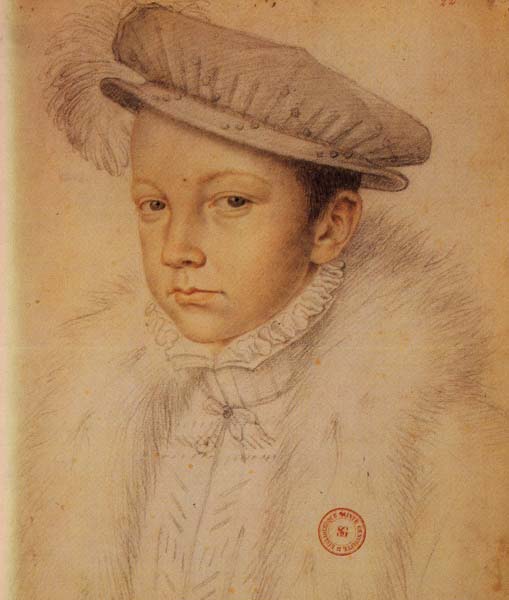

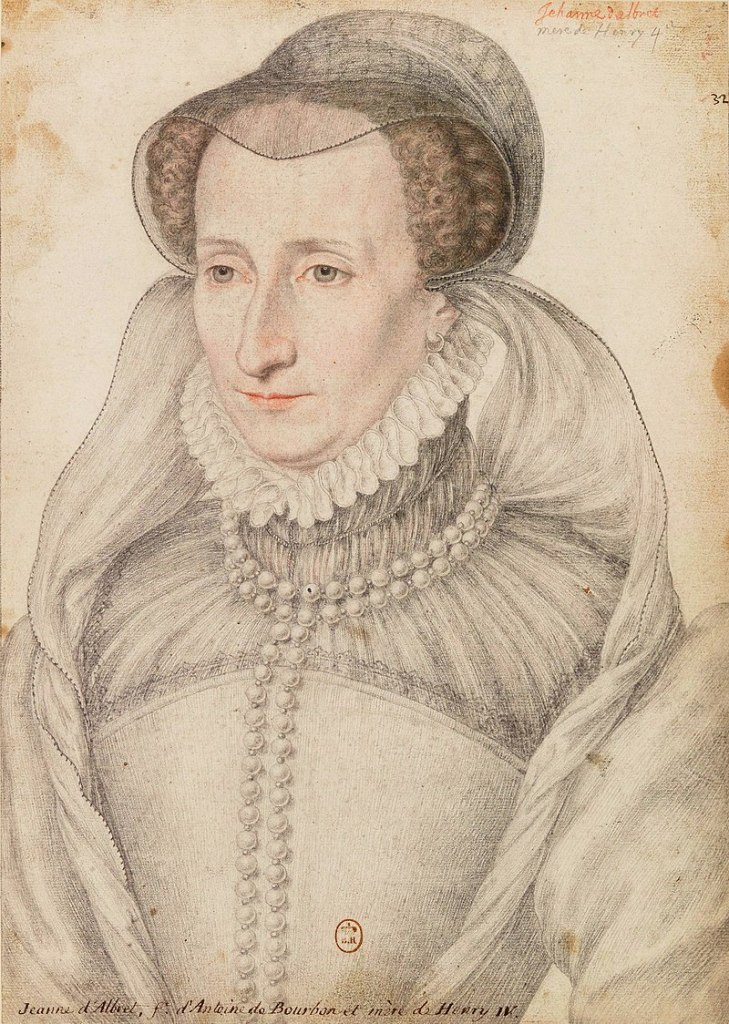
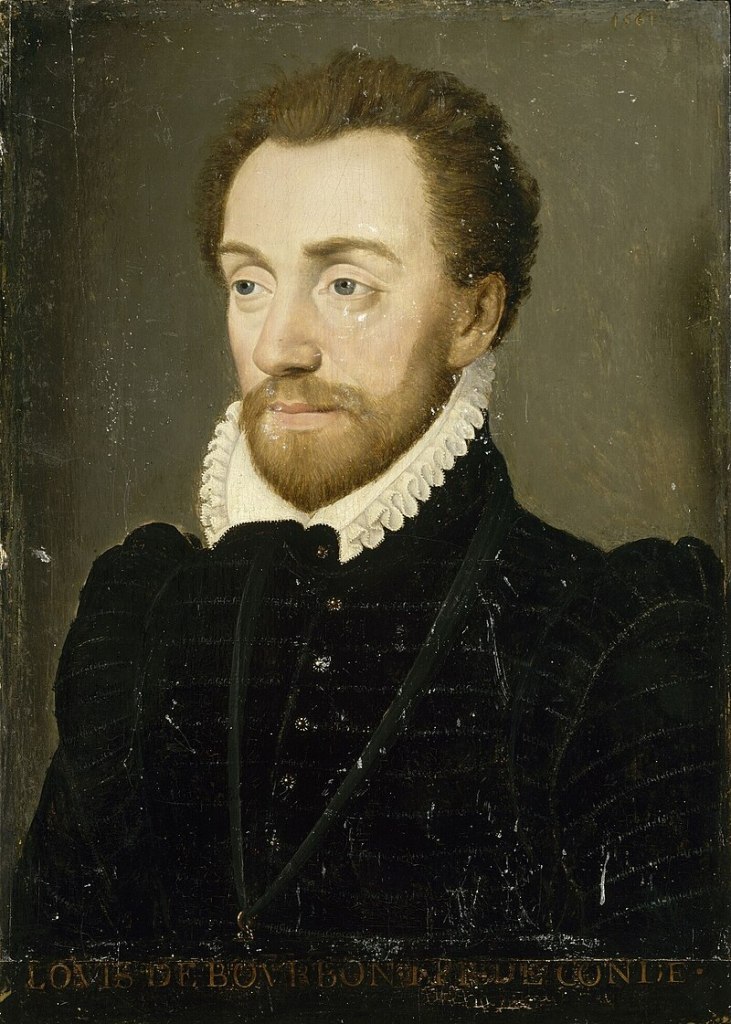
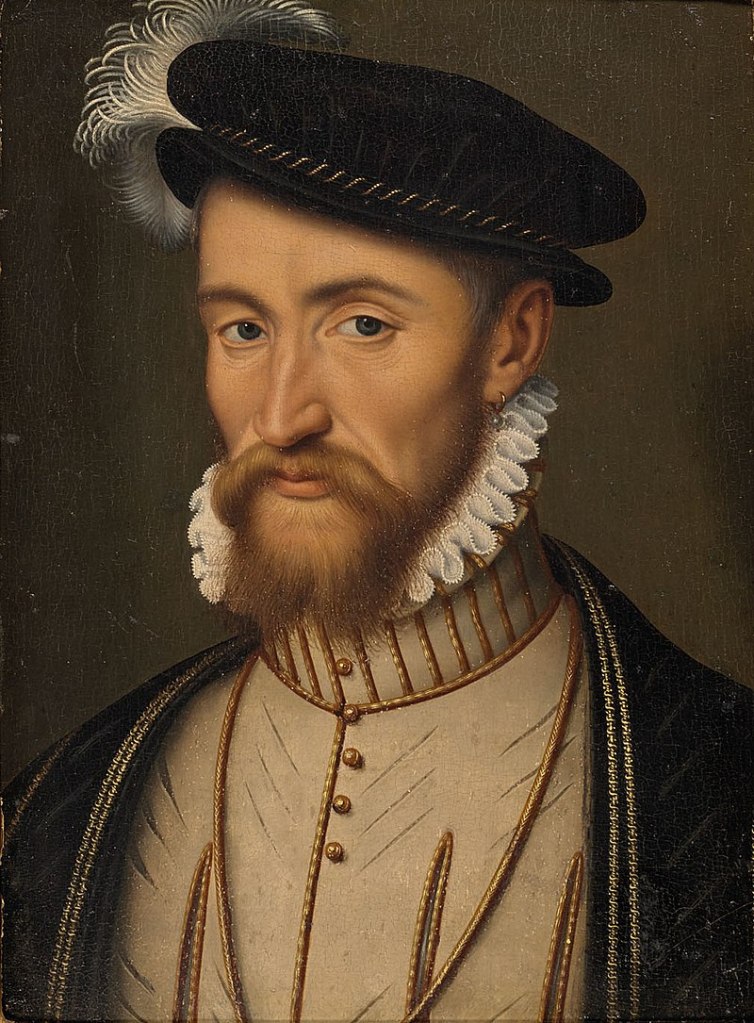
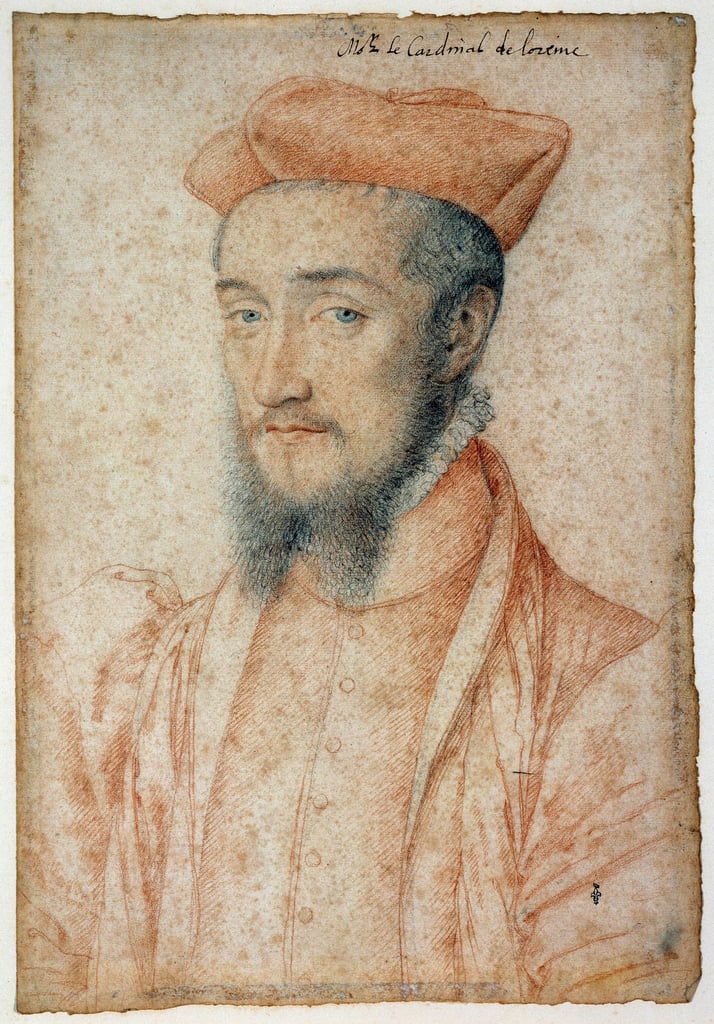
When the men rushed to Henri II’s side, they found he had recovered consciousness, but a number of splinters from his opponent Montgomery’s broken lance were sticking through the visor of his helmet. One of the splinters looked particularly deadly. When they took the king’s helmet off with care, they found the large splinter had stabbed the king through his left eye. Seeing the king’s injuries, Catherine and the Dauphin Francois both fainted, and screams rose from the audience. Montgomery, who stayed to help, got on his knees and begged the king to have his hand lopped off or have him killed on the spot. Henri, still unmercifully consciousness, pardoned him on the spot, rightfully pointing out that he was just following a direct order. The court surgeon, Ambroise (Ambroz) Paré, was joined by King Philip II of Spain’s personal surgeon who was sent as a gesture of diplomatic good will. They replicated the king’s wounds on the heads of several executed prisoners, not living prisoners as is sometimes still reported in some books about this era or on historical dramas like the recent show The Serpent Queen. They discovered that they could remove the splinters. However, there was no way to safely treat the wound to remove the pus and other infected material. So both the experts delivered the grim news to Catherine that it was only a matter of time until the king died.
(more…)Now queen of France, Catherine de’ Medici is forced to form a somewhat unorthodox household with her husband Henri and Diane de Poitiers. Meanwhile religious persecution and violence have been growing, and Henri prepares to once again face his and his father’s nemesis, Emperor Charles V.
Support the podcast on Patreon or by making a one-time donation below.
Choose an amount
Or enter a custom amount
Your contribution is appreciated.
Your contribution is appreciated.
Your contribution is appreciated.
Catherine finally gave birth to a new heir to the French throne, named Francois after her father-in-law, she kept having children. This ensured Catherine’s political survival. However, I think that even outside the need to preserve her future at the French court, Catherine wanted to be a mother. In her memoirs, her daughter Marguerite described Catherine as “ a mother who doted on all her children, and was always ready to sacrifice her own repose, nay, even her life, for their happiness.” Indeed, Catherine went above and beyond most royal mothers, making sure they were well tended to and that they ate a diet she herself prescribed even when she was away. She was, apparently, also personally strict, at least to Marguerite, who also wrote, “It is not only that I dare not open a conversation with her, but when she looks at me I almost die of fright in case I have done something to displease her.” But perhaps that was only Marguerite’s experience, since she was apparently the problem child out of Catherine’s brood, who frankly wrote in one letter, “I see that God has left me this creature for the punishment of my sins through the afflictions she gives me. She is my curse in this world.” But regardless of such sour feelings toward this one child, Catherine was clearly a loving mother, probably by any standards and not just those of sixteenth century royalty. One of the artifacts she left posterity is a prayer book, which carries a painting of Louis, Victoire, and Jeanne, the three children of hers who died in infancy.
(more…) Turning Modern
