Author: chad

  • The German Peasant Who (Almost) Started a Revolution

    The German Peasant Who (Almost) Started a Revolution

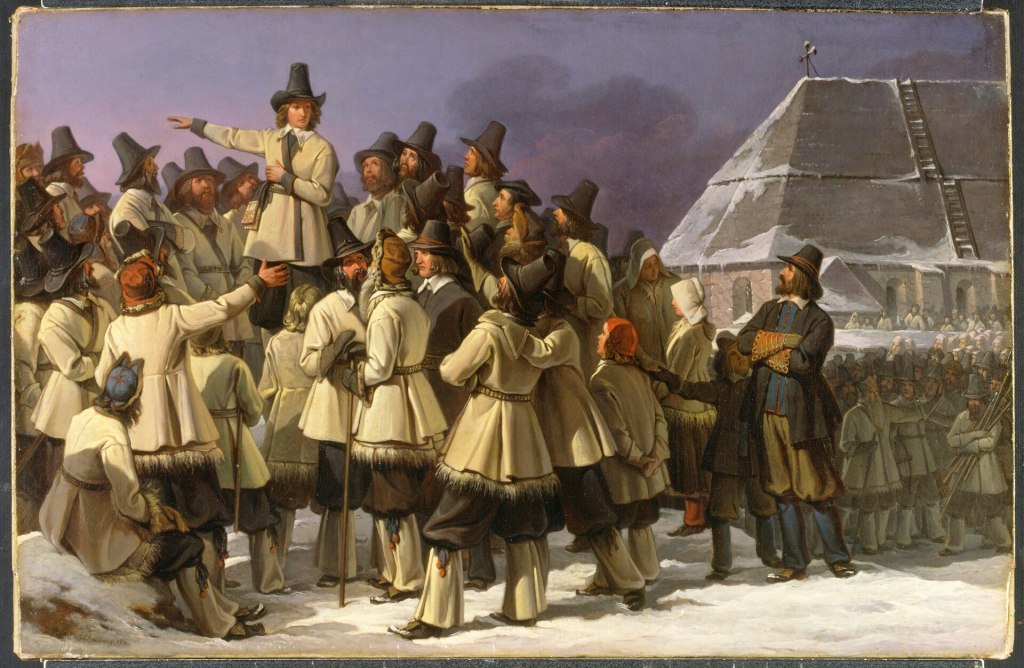
    A young German herdsman draws crowds while preaching about the evils of the nobility and the clergy and a new world where goods and land are shared. In hindsight, he is offering the elites of the Holy Roman Empire a warning about the near future, but will they listen?

    Sources:

    The German Peasants’ War: A History in Documents, eds. Tom Scott and Bob Scribner (Humanities Press International, Inc., 1991).

    Peters, Margaret E. “Government Finance and Imposition of Serfdom After the Black Death.” European Review of Economic History 27.2 (2023): 149-173.

    Roper, Lyndal. Summer of Fire and Blood: The German Peasants’ War (Basic Books, 2025).

    Wazer, Caroline. “Medieval Peasants Only Worked 150 Days Due to ‘Frequent, Mandatory’ Holidays?” Snopes.com (August 31, 2024). Last accessed: 3/28/2026.

    Wunderli, Richard. Peasant Fires: The Drummer of Niklashausen (Indiana University Press, 1992).

    Support this project: ⁠turningmodern.com/support⁠

    Transcript

    In the spring of 1476, peasants from all around southern and central Germany began to converge at the village of Niklashausen in a valley just outside Bavaria. Pilgrimages by groups of peasants to sacred sites weren’t unusual, but there was nothing of note at or near Niklashausen, just a small shrine to the Virgin Mary.

    What was especially odd was that some of the peasants left abruptly, sometimes leaving their tools behind in the fields. They were also singing songs. These weren’t well-known hymns or folk songs either, these were new. And if any of the reports were to be believed, the songs alone were proof that this was not a normal pilgrimage. In fact, there was very good reason for the clergy to be alarmed.

    They were joyfully singing about killing priests.

    This is Turning Modern.

    First, a couple of housekeeping notes. The next episode is going to be the last one I’m going to post to the Medici Podcast channel, so if you’re enjoying the new show, please subscribe to Turning Modern on whichever podcast platform you prefer.

    And second, I just want to thank my friend Andy Stelling for giving me the idea for this episode.

    Finally, if you like the show and want to support it, go to turningmodern.com for ways you can help me keep the lights on or tell a history lover in your life about us.  

    So with that, let’s get started.

    Somewhere online you might have stumbled across a meme claiming that peasants only worked 150 days a year because there were so many church holidays. At least in England, it may actually be more or less true based on the records. But it’s not because of holidays, just the fact that an average of 150 days was possibly all peasants wanted and needed to work. Even then, it’s likely that at least some peasants might have still been working the medieval equivalent of gig jobs on their so-called days off. At the very least, though, it is safe to say that peasants had more control over their time than your typical retail or office worker.

    Still, I don’t think most people today would trade their life in for a peasant’s. Aside from the lack of toilets, you still had to work hard during the harvest and pay for the privilege of existence through not just taxes but fees and dues to your lord and tithes to the church. And no matter how much you gave to the authorities you were still one or two bad harvests away from starvation.

    In the fourteenth century, though, things had gotten better because of the Black Death of all things. In the plague’s aftermath, so many people had died that peasants suddenly found that their labor was in high demand. For the first time within anyone’s living memory they had some choice in where to live and who to work for. Wages went up while the prices of common goods and the cost of rents went down. There were attempts by those in power to try to turn the clock back to before the plague, which ignited a number of violent revolts like the Peasants’ Revolt in England, the Jacquerie revolts in France, and the Ciompi Rebellion in Florence, which was perhaps the first proletarian revolt in history. Check out Episode 9 of the Medici Podcast for a description of that. Some laws restricting peasants’ newfound freedom did get put into place in different areas, but for the most part in western Europe serfdom ended up being one of the casualties of the Black Death. Yet in parts of central Europe and much of eastern Europe, the opposite eventually happened with serfdom either becoming more entrenched or even made stricter than it was before. The economic historian Margaret Peters argues that the stark difference was because western Europe was much more urbanized than much of eastern Europe. This meant that monarchs in eastern Europe had to depend much more on landowning magnates for both tax money and soldiers for their armies, so to keep them happy the serfs had to be kept down. I think another reason, but a related one, was that eastern Europe was facing more existential threats right at their doorstep than western Europe. For Poland, Hungary, and their Christian neighbors, it was the Ottoman Empire, while the Russian principalities were still threatened by the vestiges of the Mongol Empire.

    In the case of the west, since governments had more of a tax base in the cities, kings and queens there could sit back and watch serfdom collapse and have the satisfaction of knowing that all of those annoying nobles with their own private fortresses and armies were losing their captive workforce. But none of this means that peasants had an easy time in Germany or the Holy Roman Empire if you want to refer to the polity that encompassed modern-day Germany.  While serfdom did die out in most of Germany, peasants still had to live with numerous fees, restrictions, and injustices, and by the late fifteenth century, it was getting worse. Europe’s population had not only recovered by then, it was beginning to reach heights not seen since the heyday of the Roman Empire. This meant jobs and opportunities to relocate to a better area or to a town were drying up, rents were going up again, and inflation was kicking in. The landlords took advantage of this by trying to reintroduce some of the old feudal obligations and dues. Peasants weren’t forced back into being serfs, but they did find themselves having to provide more services and pay additional dues to their lords.

    Laws and customs varied from region to region, even village to village, but some things that peasants had to deal with come up over and over again in the documents we have. There were forests, streams, and lakes that peasants couldn’t fish or hunt in because they exclusively belonged to the lord. They couldn’t even gather wood from such places. If a deer was eating their crops or a fox was threatening their livestock, they would be punished if they killed the animal on the lord’s land. There’s even one case on the record where peasants complained about having to keep the lord’s hunting dogs, even though the dogs kept killing their chickens. A woman had to pay a fee if she married a peasant who lived on another lord’s land, the reasoning being that she had to compensate the lord for depriving him of her children’s future labor. There was even a fee that had to be paid by the family when a peasant died. On top of the usual dues and tithes, peasants had to give up a share of every harvest to the lord. There were certain days – the number varied wildly from place to place – when peasants were obliged to do services for their lord, such as repairing buildings or weaving hemp or building dams, and that was even if such dams caused their own land to get flooded. On these days they could also be ordered to transport food and supplies. In those cases, they had to provide their own horses or oxen. They also often had to provide their own food and drink while doing whatever chores for the lord. If you’re thinking, “I wouldn’t put up with any of that”, I bet at least some of you had to work a job where you had to pay for a permit to park your car at your own place of work or pay for your own uniform or you prepared food but had to pay full price if you wanted to eat any of the food you’d been making.

    To be fair, though, not everyone put up with it. That finally brings us to the protagonist of our story today, Hans Behem or Bohm, depending on what spelling in the records you go with. A young man in his late teens or early twenties, he lived in the countryside near the village of Niklashausen and worked herding either sheep or cows. One source claims he herded pigs, but given how hostile said source is, it was probably just a flourish to make Hans look even more disreputable. He would come from the fields to Nilkashausen wearing a drum around his neck and carrying a flute to perform folk songs. One day, though, Hans returned to Niklashausen claiming that at night he had a vision where the Virgin Mary spoke to him. At her urging he gave up his worldly goods by burning his drum and flute in a ‘bonfire of the vanities.’ We don’t really know what Hans believed she said, but we can make an educated guess based on later records: God was angry at the world because the princes and nobles and priests had  been exploiting the people for too long and a new world was coming where everything would be shared in common between the people.

    This was a time when medieval veneration of the Virgin Mary hit its peak. In fact, one could argue that by this point she had become the unofficial fourth member of the Christian Trinity. The idea that Mary had been born free of sin became commonly accepted in the Church even if it wasn’t official dogma yet, and some even claimed that Mary didn’t truly die but was carried to Heaven. Unlike other Christian saints who were limited to specific roles, groups, or countries, the Virgin Mary was the intercessor between God and all of humanity. Still, though, from back in the time when she was just one prominent saint among many, she was still said to favor two particular groups most of all: shepherds and herd animals, because shepherds and their flocks were the first to witness and honor her and Jesus.

    Hans preached to the astonished villagers that the Virgin Mary was calling on people to take a pilgrimage to the humble village shrine. The word spread, and thousands from around the region were convinced to come hear the strange young man that some were already calling the Holy Youth or the Prophet. On July 2, 1476, which happened to be the Feast of the Visitation of Mary, Hans preached to crowds between 10,000 to 30,000 people. Whatever the exact number, the crowds were so large that Hans had to speak from a window that overlooked the village square. Even then how he was able to preach to such a massive number of people is something of a mystery; perhaps there were people standing around further back who repeated his words. Among the people present were informants sent by Rudolph von Sherenberg, the prince-bishop of Wurzburg, whose jurisdiction encompassed the countryside where Hans lived. The secular lords were not yet panicking; in fact, Count Johann III of Wertheim, whose own jurisdiction was over Niklashausen itself, was pleased to have so many peasants coming to spend money on his road tolls and buying food and supplies from his merchants. Bishop Rudolph was frightened, though, and he planned to use the reports written by his informants as proof of what he already suspected was heresy.

    Although a document survives based on the informants’ reports, it doesn’t record what the sermon said. Instead it’s mostly a series of heretical claims listed from the sermon written in the third person, so Hans’ own actual words are all but lost. Still, scraps survive here and there. He is reported to have said, “Ach we, ir armen tubel”, which means “Oh dear, you poor stubborn fools”, with “poor” likely having the same double meaning of pitiful and impoverished as in modern English. Our only other possible direct quotation is “The priests say that I am a heretic and they will burn me. If they knew what a heretic was then they would know that they are heretics and I am not. As they burn me, so they burn you.”

    Hans’ one sermon gave Bishop Rudolph more than enough ammunition. Hans claimed or at least allegedly claimed that the Virgin had given him special powers, including the power to save souls from Hell. He called for all forests and bodies of water to be held in common with no one allowed to claim them as their exclusive property. He claimed the Virgin Mary demanded that the nobles stop collecting payments from the people. He said there was no such thing as Purgatory. He accused the emperor of being an evil man who let the nobles of Germany exploit the people and the Pope of having no real interest in reforming the Church. Most damning of all, he called for priests to be killed. Hans’ followers even had a catchy little ditty:

    “Oh God in Heaven, on you we call, Kyrie Eleison, Help us seize our priests and kill them all, Kyrie Eleison.”

    A fair question to ask is, why do they want to kill the priests but not the nobles? Shouldn’t they have more reason to hate the nobles than the priests? Well, to understand their mindset you have to remember that there’s a contradiction that’s haunted Christianity since it became the state religion of the Roman Empire in the fourth century. In the Gospels, Jesus is pretty explicit about the topic of wealth. Matthew 19:24 reads, “Again I tell you, it is easier for a camel to go through the eye of a needle than for someone who is rich to enter the kingdom of God.” Three of the four gospels share versions of the same quote where Jesus tells people or specifically a rich young man to sell their possessions and give the money to the poor. Besides that, people at the time knew very well it was a little odd that a religion that started with a group of men sharing everything in common and wandering around the Levant in poverty ended up with leaders living in palaces and dining on the finest meals. Officially the Church would address the dissonance with verses like Genesis 3:19, “By the sweat of your brow you will eat your food”. For them such verses were proof that the hard work of peasants was atonement for the sins of humanity. In the later Middle Ages, as societies in western Europe became more urban and richer, the issue of whether or not Christians or at least the clergy were called upon to forsake wealth became a major and more pressing controversy, with new religious movements forming in order to imitate the holy poverty practiced by Jesus and the Apostles. The debate even caused the Franciscan order to split between those who wanted to return to the humble ideals of their founder Saint Francis and those who argued it was necessary for Franciscan monasteries to support themselves by owning land and having tenants. Defenders of the status quo would claim that the biblical verses cited by their opponents were not meant to be taken literally while the verses that backed their own position were clear-cut. Or they would say that the point being expressed in the Gospels is that Jesus will redeem even the rich; it’s the sins of those other people – you know the ones, them – that are really the problem.

    The more things change, the more they stay the same indeed.

    The issue was especially galling for German peasants. Centuries ago Germany had been the fault line between Christianity and paganism. So bishops had been granted land, castles, and even vassals to support their missionary efforts and protect themselves. Later on, the emperors found it expedient to grant more land and special political powers to clergy and monasteries, so they could lighten the administrative burden. They were a more attractive alternative to lay persons because besides being educated, clergy were also celibate, meaning they wouldn’t start some pesky dynasty that would gain more land through marriages and inheritances and eventually pose a threat to the emperor’s power. Soon enough, these bishops and abbeys were controlling practically independent states within the empire. Called prince-bishops, prince-archbishops, and princely abbeys because they were literally both clergy and secular lord, the elite clergy of the Holy Roman Empire had more political power right in their hands than any European clergy outside Italy. Three prince-archbishops – those of Cologne, Mainz, and Trier – were even formally involved in the election of new emperors. Of course not all clergy were worldly and corrupt, but people did not easily forget when these princely clergy flaunted their wealth and abused and exploited the peasants on their estates. Hans was said to have even explicitly called out one notorious practice common in the Holy Roman Empire, where a high-ranking member of the clergy would claim various church offices in order to access the incomes funding those offices, but they would never set foot in those dioceses, much less give sermons or talk with the parish priests there.

    While we don’t know Hans’ own words, we do have an eyewitness testimony in the form of a letter written on July 21 1476 letter written by a priest to his superiors. The priest’s name is unknown; we just know that he was at the nearby town of Eichstatt:

    “I tell you the truth that people were hurrying to Niklashausen as if they were frantic and fleeing from an attacking enemy during a war. They said simply that no one could stop them, and that they were compelled to hurry along. Wives left their husbands, children quit their homes, and farmers abandoned their fields. Frequently as many as eight thousand people came to Niklashausen during one day, sometimes ten or fifteen or even sixteen thousand. Among the great multitudes, one could find always ten boys for every adult male. Thus, the Youth, that is, the aforesaid peasant began to preach, asserting that his authority was from God, and that he was able to lead souls from hell. He spoke openly against the pope and the authority of the church, not fearing excommunication, and he even said with impunity that the priests ought to be killed. The hearts of the laity rejoiced at such words, and they even joked about it. I can describe to you the articles that were prepared by certain notaries public all tend toward the same thing: that all the goods of the entire world ought to be held in common and divided equally among all, and that all authority of superiors is worthless. From these ideas the pilgrims composed a song which they sang when returning to their homes carrying their banners before them: o God in Heaven, on you we call Help us seize our priests and kill them all. And so forth. Thus, they entered Eichstatt, marching through the middle of the streets in troops; then entering the church, they sang their pernicious song in loud voices. This all began so suddenly, and the lord bishop [of Eichstatt] was not here, but in the town of Herriden.  I had encouraged the vicar and the preacher of the cathedral to resist and oppose such evil behavior-one of whom answered in an impious manner that he would do nothing, so ignorant were they of the justice of God. At these words, of course, I was aggravated, but remained silent, and only with difficulty stopped myself from reproaching them. One day, however, about a hundred or more pilgrims entered the cathedral singing their hateful song. They even circled the high altar while singing and calling upon God to help them kill all priests. I then entered the church, snatched up a staff, and drove them all from the church. They all fled, with the exception of one of them, who was stretched out on the ground near the church door. No one resisted me except a cook from this city of Eichstatt, who had joined them and invited them to eat at his place. He made an effort to incite them to defend themselves against me, but he could not persuade anybody, and he himself was driven from the church. Needless to say, a report of what took place immediately circulated, not only throughout the city, but also throughout the entire diocese, that I was in such a rage-as if possessed by a demon-that I was able only to be restrained with fetters, and then only with great difficulty by fourteen men.”

    The report drawn up by Bishop Rudolph’s informants was circulated to the princes of the Holy Roman Empire and it was enough to convince most of them to enact laws against peasants leaving their territories to join the pilgrimage. There were stories circulating that Hans was performing miracles, such as restoring sight to a blind child and bringing a child who had drowned back to life. Bishop Rudolph’s officials drafted and circulated a memorandum debunking the specific miracles. At one point a representative of the Church had to assure the town council of Wurzburg: “This affair did not come from God, and if all the miraculous signs took place that people say took place in Niklashausen, then they would amount to more miraculous signs than had ever taken place under our God and all his saints. They were all vain inventions and false roguery.” It seems some people in power needed some assurance that Hans Behem was not an agent of God after all.

    Aware that the wolves were circling, Hans urged his followers to arm themselves and leave their wives and children behind by July 13, which in that area was the feast day of Saint Margaret of Antioch, the patron saint of among other things peasants. Before that day, while Hans was asleep, 34 knights burst into the house he was staying in and abducted Hans. Hans and his followers were completely unprepared, so much so there was no resistence whatsoever. Hans was taken to the dungeons of Bishop Rudolph’s castle and would be tried for heresy.

    With Hans gone, a miller stood apart from the crowd waving a sword and tried to claim that he too had visions of the Virgin Mary. But somewhat ironically it was a local nobleman, Conrad von Thulman, and his son who became the new leaders of the pilgrimage. They led the pilgrims to the gates of the bishop’s castle and cried up to the walls, “Return the Youth to us, return the holy and innocent man, or else we will destroy the fortress and the city.” The bishop’s marshal came out to speak with them, calmly pointing out that without canons or catapults they had no chance of taking the castle. That was enough to cause many of the pilgrims to walk away, though a sizable mob remained at the gates. The bishop ordered the castle’s canons be aimed over the crowd’s heads to try to scare them off. Unfortunately, the pilgrims assumed that the canons had been aimed directly at them and God had protected them. When they still refused to leave, now the canons were fired on the crowd, killing several people and wounding many more. The castle gates then opened and a retinue of knights rode out of the castle, rounding up some of the pilgrims and the Thulmans and chasing the others away. Hans’ pilgrimage was truly over, but the bishop had no way of knowing that Hans actually was a prophet in a way. His short life and career were a warning that within fifty years’ time Germany would be ground zero for an unstoppable religious schism that would remake Christianity for countless people and, after that, Germany would also be rocked by the Peasants’ War, the most violent outbreak of popular rage until the French Revolution.

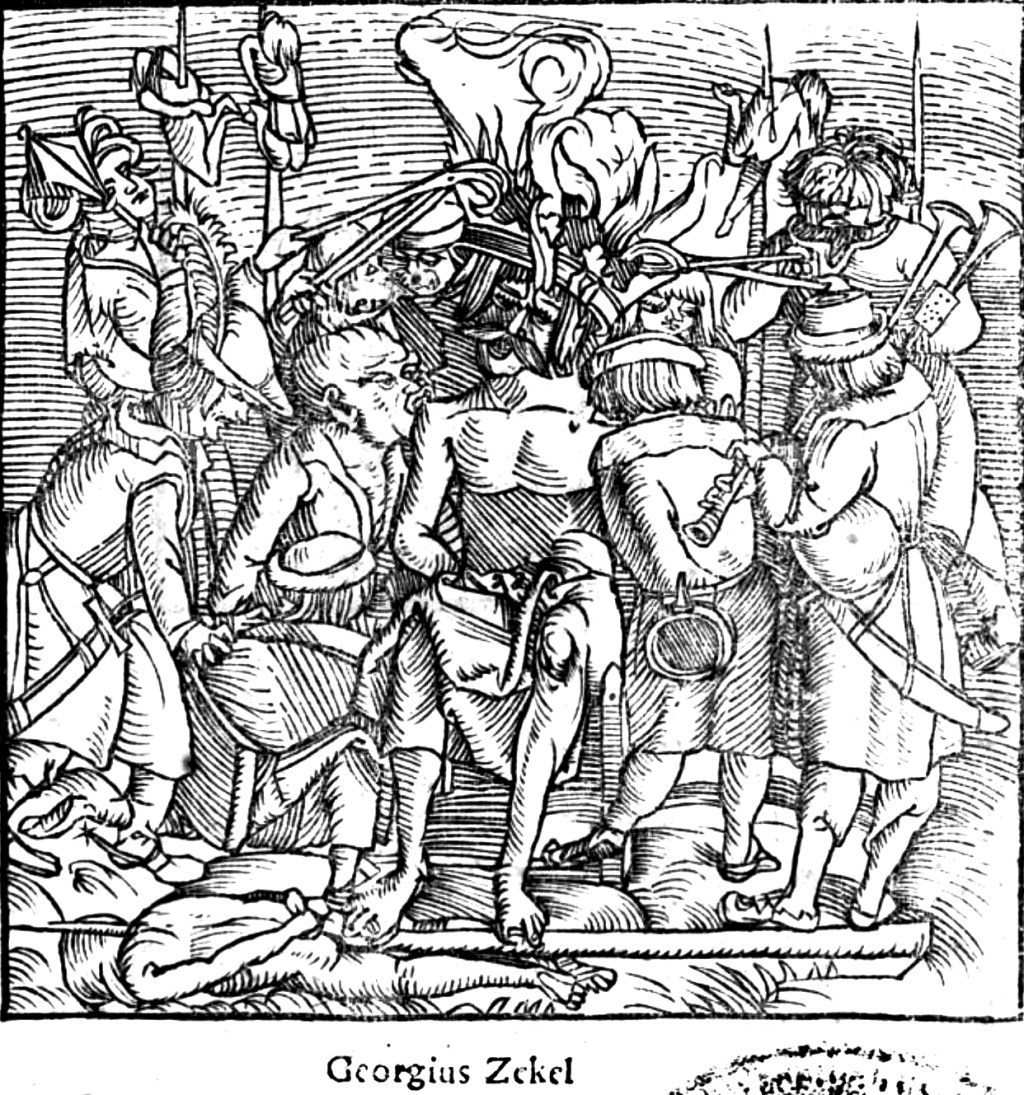
    The pilgrims held by the bishop were eventually freed with no further punishments. The Thulmans were forced to agree to become direct vassals of the prince-bishop. Hans was to die, however, along with two other men. One was a religious hermit who lived in a cave near Niklashausen whose name was not preserved. Possibly he had influenced and even encouraged Hans, but we know nothing of their exact relationship, if there even was one. The miller who claimed to share in Hans’ visions was to be executed as well. Hans was convicted of heresy, but, since trial records did not survive, we don’t know what the other two men were charged with. Possibly it was treason. Even though Hans was condemned, for a conviction of heresy Bishop Rudolph still needed a confession. To get it, Hans was tortured by the strappado, a common torture method. Hans’ hands were tied behind his back and attached to a rope thrown around a beam in the ceiling. Hans was pulled up with the rope, violently twisting his arms and dislocating his shoulders. No doubt physically and mentally broken, Hans confessed that he had lied about his visions and that he had been coached by an unnamed friar who had escaped. The friar’s identity or if he existed at all is a mystery. Most likely there was some confusion and the friar was actually the hermit already in custody. Even so, it was important for the authorities to blame the entire affair on a member of clergy gone rogue. It was unthinkable that an uneducated peasant could preach so persuasively and effectively.

    As a heretic, Hans was to be burned at the stake, while the miller and the hermit were to be beheaded. Unfortunately, our only source for the execution is an account written years later by Abbott Johann Trithemius, who wrote about Hans with undisguised contempt. Nonetheless, the details of his account have a depressingly authentic feel. Hans was forced to watch as the hermit and the miller were beheaded. Either because he was genuinely ignorant of what was happening or because he was in a state of shock, he asked the official overseeing the execution, “Are you going to hurt me?” The official answered, “No, but someone has prepared a bath for you.” As the executioner tied Hans’ hands to the stake, Hans started singing a song about the Virgin Mary. He seems to have composed the song himself, but the lyrics, like so many of Hans’ words, are lost to time. A crowd watched all the proceedings but they stood back as far as they could. Some believed it was better to be cautious in case Hans was a prophet after all and there would be a deadly display of divine wrath, others thought Hans truly was a heretic and when he died the demons that possessed him would come roaring out to find a new host to possess. Hans kept singing as the flames were lit, but he stopped once the fire began to singe his flesh. He screamed three times before he died. Abbot Johann notes simply that “No miracles happened.”

  • The African King Who Had a Portuguese Name

    The African King Who Had a Portuguese Name

    The Kingdom of Kongo establishes a rare partnership with an up-and-coming European power, Portugal, to the point that the King of Kongo and his family embrace Christianity and take Portuguese royal names. However, this partnership will also be ground zero for one of the greatest atrocities in human history.

    Sources:

    Almeida, Marcos Abreu Lelitão de. “Speaking of Slavery: Slaving Strategies and Moral Imaginations in the Lower Congo” (Doctoral dissertation, Northwestern University, September 2020).

    Bosma, Ulbe. The World of Sugar: How the Sweet Stuff Transformed Our Politics, Health, and Environment over 2,000 Years (Harvard University Press, 2023).

    Etherington, Norman. “Christian Missions in Africa”, The Wiley-Blackwell Companion to African Religions, ed. Elias Kifon Bongba (Wiley-Blackwell, 2012).

    Garretson, Peter P. “A Note on Relations Between Ethiopia and the Kingdom of Aragon in the Fifteenth Century.” Rassegna di studi etiopici 37 (1993): 37-44.

    Gondola, Ch. Didier. The History of Congo (Greenwood Press, 2002).

    Hanno. “Gorilla Warfare.” Lapham’s Quarterly, Last accessed: 3/12/2026. https://www.laphamsquarterly.org/animals/gorilla-warfare 

    Klein, Herbert S. The Atlantic Slave Trade, 2nd edition (Cambridge University Press, 2012).

    MacGaffey, Wyatt. “Economic and Social Dimensions of Kongo Slavery (Zaire)”, Slavery in Africa: Historical and Anthropological Perspectives, eds. Suzanne Miers and Igor Kopytoff (University of Wisconsin Press, 1977).

    Russell-Wood, A.R. The Portuguese Empire, 1415-1808: A World on the Move (Johns Hopkins University Press, 1998).

    Thornton, John. A Cultural History of the Atlantic World, 1250-1820 (Cambridge University Press, 2012).

    ___________. Afonso I,  Mvemba a Nzinga, King of Kongo: His Life and Correspondence, trans. Luis Madureira (Hackett Publishing Co., 2023). 

    Support this project: turningmodern.com/contact

    Transcript

    As soon as his secretary finished scratching the letter he dictated out on parchment, the king waved him away, ignoring his protests that there were still other matters to address. The king was weary in both body and mind. The letter would be headed over the sea to his fellow monarch, the man he called brother. As much as he could within the smothering limits of diplomatic language, he pleaded for help. But by now he was under no illusions that his pleas would be answered with anything but sweet, empty words.

    He groaned as he relaxed himself onto his couch, the pain in his back making itself known as he did so. He was so young when the pale men from beyond the great river first came, sweating and stinking under their heavy clothes and metal helmets and breastplates. Their priests, dressed in plain black, spoke to him of the Great Creator that both their peoples worshipped and how He had come to their lands dressed in human flesh, to suffer as men suffered, and the king believed. And he still believed, even as these people who called themselves “Christians” schemed with their merchants and forced his people to follow foreign priests who would not even deign to speak their language. These men of God mocked their people’s customs and a few even slept with the wives of great nobles. These self-described men of God had even known of a conspiracy to kill him and said nothing.

    Then there were the rumors. A man of the royal family, distantly related but the king himself had been there to celebrate the birth of his first child, had disappeared, his wife saying he had been ambushed and taken to the sea. A village near the coast was found a smoldering ruin, its people nowhere to be seen. And people in the royal court were telling each other stories of a woman who fled from an island just over the sea, of people being worked to death just to grow a plant that was as sweet as honey.

    All he could do was make himself forget, and pray that God would give his successors more wisdom than he had.

    This is Turning Modern.

    A forgotten milestone in the history of European colonialism, one that actually took place almost a decade before the voyages of Christopher Columbus, was the first contact between Europeans and the Kingdom of Kongo in Central Africa. Up to that point, West and Central Africa might as well have been across an ocean from Europe. On land, you had around one thousand miles of the Sahara Desert. By sea, a strong, one-way current in the Atlantic Ocean made it seemingly impossible to sail back north by a certain point, effectively preventing Europeans from safely sailing further south than the Moroccan coast and stopping West Africans from reaching North Africa and Europe. Europeans who tried to make the journey down the West African coast either had to make it home by land or were never heard from again. It was this all-powerful current that also reportedly doomed all but one of the 200 ships that, according to legend, the Mali Empire of West Africa sent to explore the Atlantic.

    Yet there was one ancient account of someone from the Mediterranean who made the Atlantic voyage and lived to tell the tale, suggesting it was in fact possible. An account left by the Carthiginian explorer Hanno claims that he made it possibly as far as Mount Cameroon, although historians still argue over whether or not he actually made it that far south or if the account was entirely or partially fabricated. Still, at least the story of Hanno’s voyages gives us this one intriguing and rather violent passage that capped off what sounds like an otherwise peaceful adventure:

    Sailing along by the fiery torrents for three days, we came to a bay called Horn of the South. In the recess of this bay there was an island with a lake in which there was another island, full of savage men.

    There were women too, in even greater number. They had hairy bodies, and the interpreters called them gorillas [apparently a local term meaning hairy people]. When we pursued them we were unable to take any of the men—for they all escaped by climbing the steep places and defending themselves with stones—but we took three of the women, who bit and scratched their leaders and would not follow us. So we killed them and flayed them, and brought their skins to Carthage. For we did not voyage farther, provisions failing us.

    Pliny the Elder claims that the skins were placed in the temple of the goddess Tanit but were lost when Carthage was burned down by Rome. Again, some classicists and historians are skeptical of the account, but if anyone knew how to make the perilous journey down the coast of West Africa and get back, it would have been a Carthaginian.  

    This all changed thanks to an accident. A Genoese merchant who was involved with the grain trade between northern Europe and the Mediterranean was blown off course to the Canary Islands, which had been forgotten since antiquity when they were known as the Isles of the Blessed. The merchant discovered that the islands were plentiful with orchil, a lichen used to make blue dye. Unfortunately for the people already living on the Canary Islands, this chance discovery almost immediately made the Canary Islands a hotspot for conquest and settlement. After decades of fierce resistance most of the natives were wiped out, and the age of European colonization made its bloody debut.

    As more Europeans made the voyage to the Canary Islands, they began to learn more about the currents and countercurrents that ran around the islands and into the Atlantic, leading to the further discoveries of uninhabited islands further out in the Atlantic, Madeira and the Azores. By 1434 sailors worked out that if you went out to sea and then to the Atlantic islands at the right point, you could catch a current that would take you back to mainland Europe.

    This discovery just so happened to almost coincide with an apocalyptic event that happened on the other side of Europe. In 1453, the Byzantine Empire, which had been on life support for at least a century, finally perished when its capital of Constantinople fell to the Ottoman Empire. This was not only a huge symbolic victory for the Ottomans, who could now claim that they had seized the mantle of the Roman Empire, but it also meant that they practically controlled the trade routes of spices and silk coming into Europe from Asia. But what if Europeans could reach Asia another way, by finding an uncharted route around Africa?

    Adventurers like the Portuguese prince Henrique the Navigator dreamed of discovering either this new Asian trade route or the source of all the gold that for centuries had made its way from West Africa to the Mediterranean or even discovering the mysterious kingdom of Prester John, the legendary Christian king who could help finally turn the tide against the seemingly invincible Ottoman Empire.

    Now because a lot of the men leading these voyages were the younger sons of the nobility, who stood to inherit no land and since joining the Church didn’t appeal to them, they instead decided to dedicate their life to fighting and looting. So the first thing the Portuguese tended to do when they came across coastal villages in lands no European had seen in over a thousand years if ever was raid them. They must have thought that these people don’t even wear real armor, so we might as well, right? Unfortunately, what the Africans did have were arrows dipped in extremely effective and fast-acting poisons. So many of the early clashes between the Portuguese and natives ended in death and disaster for the Portuguese, so much so the Portuguese monarchy made the wise policy decision of discouraging raids and sending official explorers and representatives to approach the natives peacefully.

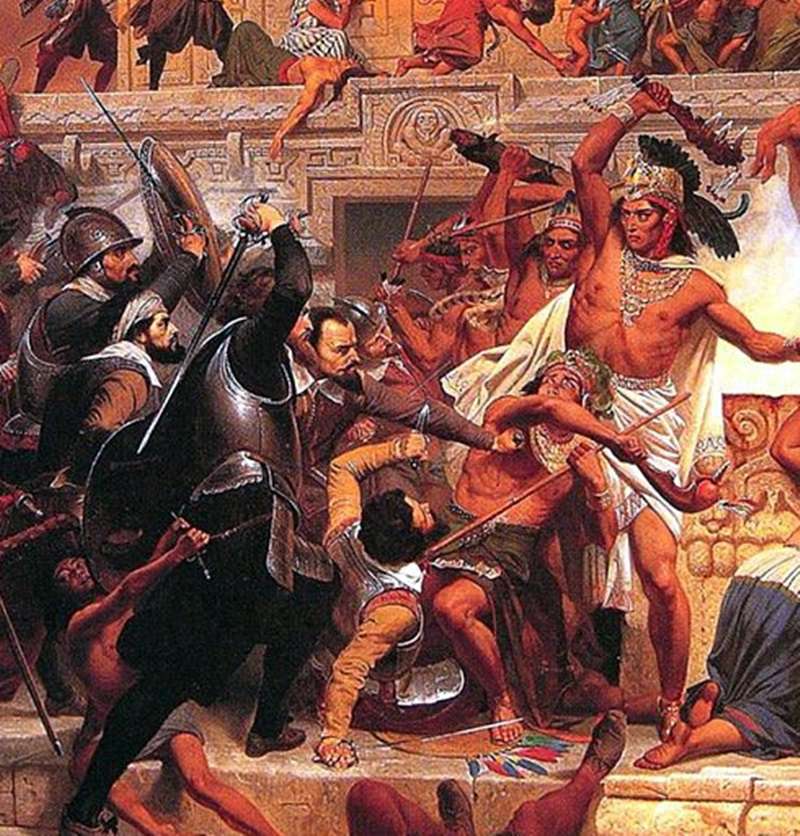
    Reading about this while doing research did make me wonder if the Aztecs weren’t caught so off-guard by Hernan Cortes and his crew and Cortes wasn’t nearly as lucky as he was, if the history of American-European relations might have gone very differently, but that’s a whole other story.

    One of these explorers working on behalf of the crown was the mariner Diogo Cão. He was explicitly sent to find Prester John and iron out an anti-Muslim alliance with him. By this point it was widely believed that Prester John’s kingdom and Ethiopia were one in the same, but it was also thought that the African continent’s southernmost point was somewhere around Benin and that it would be possible to easily sail around Africa to Ethiopia. Cão must have thought he found a way to reach Ethiopia after all when instead he came across the Congo River, which would have been the largest and deepest river Cão and his men had ever seen. Instead of a convenient express waterway to Ethiopia, though, Cão found people who told him that they were in the territory of another large kingdom, Kongo.

    In an example of what counted for benevolent diplomatic relations in those days, Cão accused the Kongolese of harming or detaining the scouts he sent ahead and kidnapped four high-ranking locals to send back to Portugal. But they were given the best possible treatment under the circumstances and returned to Kongo with tales of a far-off country where the people lived in strange but astonishing houses of stone.

    Like Cão let’s get acquainted with the Kingdom of Kongo. Once its territory was comprised of three separate kingdoms, but through the usual series of conquests and marriage alliances they became consolidated into one entity by the fourteenth century. When he finally saw it, Cão compared the size of the kingdom’s capital Mbanza Congo to the Portuguese city of Evora. At the time, Kongo’s iron and steel and textile industries also rivaled anything in Europe. Kongo was certainly much less urbanized than much of Europe, but based on tax and baptism records, the historian John Thornton argues that Kongo and Portugal had similar rates of children surviving into adulthood and roughly the same levels of agricultural development. 

    As for how the Portuguese viewed the Kongolese, it does seem like their perceptions ranged from seeing the Kongolese as a noble people to whom poverty was unknown to strange barbarians who needed to be educated in the proper ways of civilization. But skin color wasn’t a factor, not yet. It would take an entire separate podcast to delve into how modern racism evolved, and it’s a topic we’re definitely going to be coming back to. But to give you an idea of how much skin color was not part of the equation, at around this time the king of the Spanish kingdom of Aragon was seriously considering a double marriage with the imperial family of Ethiopia, with his sister marrying the emperor and the heir to the Aragonese throne would marry a woman from the imperial family. The negotiations aren’t very well documented and they came to nothing in the end, but it still seems like any modern idea of race wasn’t an issue. Nor does it seem to have been a problem when Cao was warmly welcomed by the royal court at Mbanza Congo and managed to establish normal diplomatic relations between his lord King João of Portugal and King Nzinga Nkuwu. Soon enough, men from the Kongolese nobility were sent to Portugal to serve as ambassadors and cultural observers of a sort, and the King of Kongo agreed to allow Portuguese merchants and missionaries in his country. Back in Portugal there was soon a new fad for the lavish textiles and elaborately carved ivory statuettes of Kongo while the Kongolese requested that the King of Portugal send experts who could teach them two things: how to grow wheat and make bread, and how to build houses made of stone. 

    Of course, it helped that the king seemed eager to embrace the Christian faith, either out of genuine devotion or because the Portuguese were willing to help him put down a rebellious vassal. This is where our story gets a bit buried under lots of half-remembered oral traditions, distorted legends, religious propaganda, and scholarly speculation. It’s still hotly debated how much the Kongolese at the time of European contact understood Christianity and what exactly their conversion meant. It doesn’t help that the pre-colonial religion of Kongo isn’t well understood. We just know from early missionary reports that the Kongolese worshipped a large number of regional gods and ancestral spirits. Some missionaries were even dismayed to meet Kongolese people who didn’t believe in anything divine or supernatural at all.

    It’s thought that there was a widely recognized supreme deity Nzambi Mpungu who was seen as the creator of the world and the god of the sky. This would have been easy enough to fit with the Christian God. There was also a widespread belief that many regions were protected by the powerful spirit of the first ancestor who lived in that region, an idea that missionaries thought they could relate to the Christian veneration of the saints. John Thornton suggests that it was likely many Kongolese sincerely accepted Christianity, but many still continued worshipping their gods and ancestral spirits. If so, it would have been similar to many other cases throughout history where Christianity was made to fit into a new culture it encountered.

    In any case, Nzinga Nkuwu took on Christianity with gusto. Most of the royal family were baptized and given the names of the Portuguese royals, with the king himself becoming João, his wife taking the Portuguese queen’s name of Leonor, and their son adopting the name of João’s son and heir, Afonso. All of the high nobility of the kingdom were then ordered to undertake a mass baptism. Later in a letter written to the king of Portugal, Afonso would claim that around the outdoor spot where the baptisms were taking place they had to build high walls topped with thorny bushes to keep people from escaping, suggesting that maybe not everyone was on board.

    Curiously, maybe not even the renamed king João of Kongo was that committed. In one of the many letters he wrote to the Portuguese kings, Afonso would later mention that his father renounced Christianity in the last years of his life, but he does not elaborate. Maybe he had second thoughts or the whole thing was just political theater after all. Even then, it doesn’t seem King João tried to slow down the flood of missionaries and priests into his country before his death in 1509. As soon as his father died, Afonso was warned by his mother and told to come to the capital immediately, giving him a strong position when his brother Mpanzu challenged his claim to the throne. John Thornton is skeptical of Afonso’s claim in his letters that Mpanzu had refused baptism and made himself the champion of the country’s religious traditionalists, thinking it was just a way for Afonso to get the Portuguese to support him in his eventually triumphant campaign against Mpanzu, who either died in battle or was executed on the battlefield. But it certainly wouldn’t be the first time in history the popularity of a brand new religion caused a civil war.

    Afonso’s letters seem to reflect a sincere faith, declaring in one letter that “our former religion is all fantasy and empty air.” One story that still gets told in modern-day Congo is that he saw his mother wearing a pagan idol around her neck. He became so furious with holy anger that he ordered her to be buried alive. Given that Afonso’s mother paid out of her own pocket to support missionaries and to help construct a church and there’s no indication she passed away anywhere other than in her bed, the tale doesn’t pass under any scrutiny. Even so, maybe it has a crumb of truth, revealing that Afonso was a sincere and devout convert.

    As I mentioned we have many of the letters he wrote to King João II of Portugal, then his cousin and successor Manuel I, and finally King João III. João II’s son, Afonso’s namesake, was killed when he fell and was dragged behind his horse. Despite Afonso’s zeal, the letters betray a growing disillusionment. But to really understand this disillusionment, we need just one more interlude to see how Congo’s fate was intertwined with a sweet but sinister substance that would be the cause of the destruction of millions of lives over the centuries: sugar.

    I won’t go into the details of how sugarcane gets turned into sugar, except to say it’s a very torturous process. The crop requires a lot of land and water and refining it into sugar takes a great deal of backbreaking labor and wood to burn. On top of it all, sugarcane thrives only in climates that are hot year-round. When the cultivation of sugar cane spread from India to the Middle East, sugar plantations were established in Mesopotamia with work forces that in no small part used enslaved labor from around the Mediterranean and East Africa. However, after thousands of East African slaves launched an especially deadly revolt at sugar plantations on the Euphrates River in the ninth century, other sugar plantations started to avoid enslaved labor. When sugar became a major cash crop in medieval Egypt, for example, the farms there ran entirely on free labor. After the Crusades had the odd side effect of introducing sugar to Europe, the Republic of Venice opened up sugar plantations on the island of Cyprus and used some slaves, although soon enough they found that trying to grow a crop that causes a massive amount of deforestation as a matter of course and hogs a lot of land that could be used to grow, well, actual food on a relatively small island…it just wasn’t a sustainable long-term plan. Would-be sugar farmers in Sicily and southern Spain and Portugal ran into similar logistical problems, not the least of which was that the work wasn’t exactly appealing to free peasants and sharecroppers.

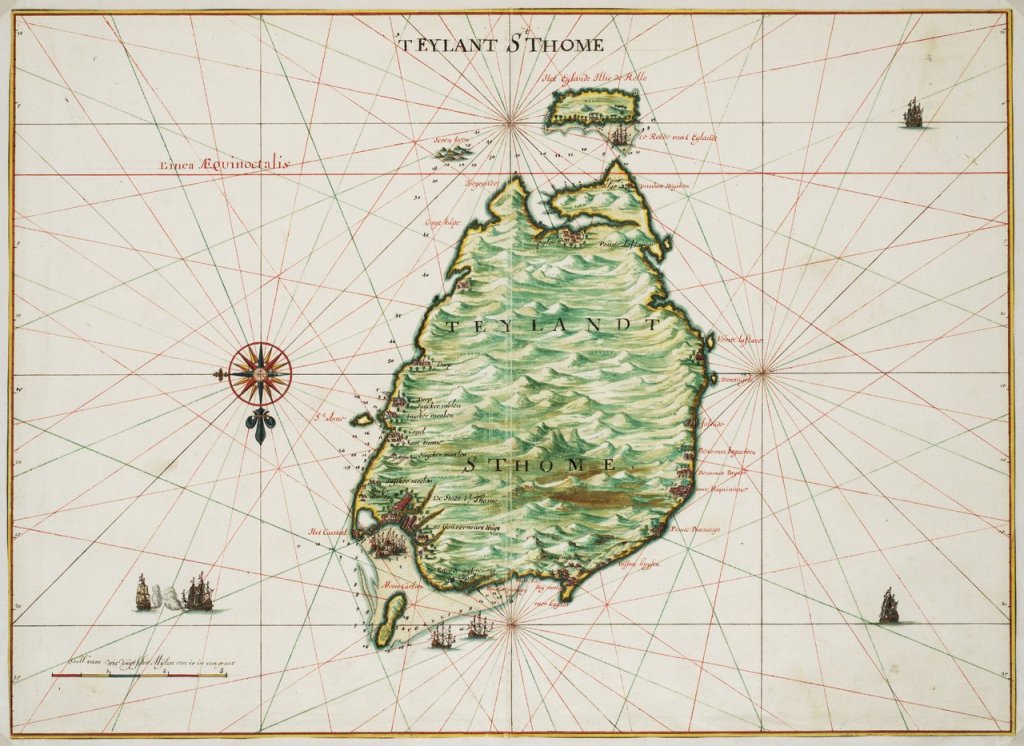
    At first the island of São Tomé near the mouth of the Kongo River was just used by the Portuguese as a base to monitor and impose duties on the trade coming out of Kongo. But then somebody realized that the island’s tropical climate was ideal for growing sugar cane and wood and land would be plentiful. At first, they tried to get peasants from Portugal to work the farms there, but few were willing, and anyway none of them adapted well to the tropical heat and diseases. Well then, they probably thought, we’re already exporting slaves out of West Africa, so why not use them? They’re used to the heat, have an immunity to the diseases, and since it’s an island we won’t have to worry about escapees, so…

    Of course, slavery had existed in Central Africa since time immemorial. But slavery wasn’t the same in every society, even within these regions in Africa. In Kongo and neighboring countries, slavery was, in the words of historian Wyatt McGaffey, more about social dependency than labor. Slaves were prisoners of war or given up as tribute. They would be given to a particular family and assimilated into the new culture they now found themselves in. While they were still considered to be of an inferior social rank, they could make their own money and work their own businesses and they even had a chance of one day becoming a leader of whatever family they were placed in. Slavery functioned as a way to place new blood in a dying lineage or to place fertile women and skilled workers in a newly established town or in underpopulated areas. It’s probably telling that one of the words and terms for slave in Kongo was also the word for “child.”

    I don’t want to soften this. These people were still being violently stripped away from their homes and their own families and spouses and pressured to acclimate to an unfamiliar culture. And they could still be traded or sold by their new families. Also there was in some areas apparently a chance they might be sacrificed to commemorate the death of a great leader, so there’s that. But for those who for whatever reason want to insist slavery is basically the same everywhere, you need to honestly ask yourself if you’d rather be enslaved under the system I just described or have to spend every waking moment of your life toiling away in the tropical heat at the sugar cane fields.

    Since trading slaves had already long been part of the Kongo economy, the Portuguese quickly became involved. At first African slaves were sent to Portugal as typical farm and household laborers. As sugar production took off in São Tomé and the newly discovered Caribbean and Brazil, though, the demand for slaves skyrocketed. As early as 1516, 2,000 slaves a year were coming out of Kongo. The trade grew so rapidly that King Manuel became concerned he wasn’t getting his cut and he tightened government control over Kongolese trade, establishing government outposts around the African coast. This only drove more of the slave traders and other merchants further south to modern-day Angola. It was a territory the kings of Kongo long claimed sovereignty over, but there were a number of kingdoms there, with one in particular growing strong and rich on the slave trade and beginning to challenge Kongolese authority.

    I opened up this episode with a bit of artistic license. The truth is we don’t know if King Afonso fully understood what happened to the slaves who ended up in São Tomé, and at any rate Afonso clearly didn’t want to be muscled out of the profits from the slave trade either. Still, I think one can detect in the letters a genuine alarm at how far the trade was going and the devastation it was causing, with his people being abducted in slave raids and parents selling their own children to slavers out of desperation caused by poverty, poverty that the slave trade itself was helping to spread. In one letter, Afonso cries out, “Sire, this corruption and depravity has reached such a level that our homeland is becoming completely depopulated.” In another, oft-cited letter, Afonso pleaded, “Many of our countrymen capture and sell many of our free people to satisfy their immense greed for the goods that your subjects bring from your kingdom. They often abduct noblemen and their children as well as relatives of ours and sell them to the white men in our kingdoms. As soon as the white men buy these captives, they brand them with hot irons, and our guards find them when they are about to be shipped out. The white men claim they purchased them but cannot say from whom.” It finally got to a point where Afonso threatened to cut off all trade with Portugal. Whether he was dissuaded from this course of action or he reconsidered because he thought that Kongo had gotten too dependent on the trade from Portugal, Afonso stepped back from that particular precipice, but he did create a commission comprised of Kongolese officials and one member of the Portuguese merchant community to judge cases of illegal enslavement, all in order to combat the plague of kidnappings. It’s unknown if this attempt was at all successful.

    Afonso had other reasons to feel embittered by the men from the north. According to his letters, Portuguese merchants were ignoring Kongolese laws and the priests sent from Portugal were hopelessly corrupt. In Afonso’s own words to the Portuguese king, “My lord and brother, the present time is more mean-spirited than times past, for the very same people who administer the body and blood of our Lord Jesus Christ are the ones who chase away the truth, and are enticed by the world, by greed, by the devil, and the temptations of the flesh. They forsake the promise they have made of their own free will to raise the host at the altar and preach the doctrine and teach the word of eternal life that is the word of our Lord Jesus Christ.” Afonso tried dealing with the problem by encouraging the ordainment of more homegrown priests, sending his own son Henrique to be educated and ordained as a priest in Rome by Pope Leo X himself. Afonso’s hope for Henrique was that he would become the first archbishop of a Kongolese church answerable only to the Pope himself. However, under Portuguese diplomatic pressure, the Pope just gave Henrique the title of Bishop of Utica, an ancient but totally empty church title since Utica happened to be in Tunisia, a Muslim country. Throughout Afonso’s reign, the souls of the Kongolese would stay in the hands of Portuguese priests and bishops.

    While the king and his court were hearing Easter Mass in 1540, seven or eight Portuguese men fired their muskets at Afonso. Appropriately enough for the first fully Christian king of Kongo, Afonso was miraculously unscathed, although the shots still killed a bystander and wounded several courtiers. The reasons behind such a dramatic assassination attempt are unknown and it’s difficult to tease out the facts from the flurry of letters between Afonso, the King of Portugal, and various Portuguese notables in Congo denying involvement or accusing others over it. Most likely, the Portuguese were conspiring with some of Afonso’s various sons and grandsons who were scheming to be the next on the throne. If someone from Afonso’s own family did sign off on the assassination attempt, they were jumping the musket since just three years later, Afonso was dead at the age of 85.

    The kings that followed Afonso would continue to take Portuguese names, even as the slave trade that the Portuguese stoked robbed the kingdom of its people and condemned them to Hell while sapping the kingdom’s own vitality. The reign of Afonso I would prove in hindsight to be the kingdom’s apogee. The Kingdom of Kongo would still survive, though, until 1914, when Kongo’s former benefactors the Portuguese had what was left of the kingdom merged with their colony of Angola with a stroke of a pen and unceremoniously deposed the last king, who to the very end bore the distinguished Portuguese royal name of Manuel III.

  • The First Printed Book Banned By The Church

    The First Printed Book Banned By The Church

    A genius prodigy sets out to change the world by resolving all philosophical and religious disputes with one book, his own 900 Theses, and a debate in Rome between Europe’s brightest intellectual lights. And he will leave his mark on history, just not in the way he wants…

    Sources Cited:

    Hanegraaf, Wouter J. Esotericism and the Academy: Rejected Knowledge in Western Culture (Cambridge University Press, 2012).

    Bradatan, Costica. Dying for Ideas: The Dangerous Lives of Philosophers (Bloomsbury Academic, 2015).

    Kristeller, Paul Oskar. Eight Philosophers of the Italian Renaissance (Chatto & Windus, 1965).

    Mirandola, Pico della. Syncretism in the West: Pico’s 900 Theses (1486), ed. and trans. S.A. Farmer, 2nd edition (Arizona State University, 2003).

    ____________. “Oration on the Dignity of Man”, trans. Cosma Rohilla Shaizi. Cosma’s Home Page, 21 November 1994. Last accessed 2/23/2025. 

    Slattery, Luke. “A Renaissance Murder Mystery.” The New Yorker (20 July 2015).Last accessed 2/25/2025.

    Stethern, Paul. Death in Florence: The Medici, Savonarola, and the Battle for the Soul of a Renaissance City (Pegasus Books, 2015).

    Transcript

    In the winter of 1486, a wealthy 24-year-old man arrived in Rome. He brought with him most of his library of books and manuscripts, which encompassed the languages of Latin, Greek, Arabic, and Hebrew as well as thousands of years of history and accumulated knowledge. Also he had freshly printed copies of the book he wrote himself, with the title 900 Theses or, to use another possible English translation, 900 Conclusions. He had copies sent to universities across Italy, to some of the most well-known scholars and theologians of western Europe, and to the distinguished circle of academics in Florence sponsored by the powerful Medici family. The book included an announcement, inviting each recipient to come to Rome for a debate and promising to pay for any travel expenses himself.

    The young man audaciously claimed that the 900 Theses contained every single controversial or unclear point ever raised by the great thinkers of the world since the days of the ancient Egyptians. Using these theses as the topic, he wanted, quite literally, the debate to end all debates. He truly believed that all religious conflicts and philosophical disagreements could be resolved right there in Rome with the result that the grand truth behind all doctrines would be revealed. The high hopes he had was symbolized in the date he chose for the first day of the debates: January 6, the feast of the Epiphany, when the three wise men or magi visited the infant Jesus. Such debates were standard exercises for universities and were even often held in public, but usually it was just one thesis being discussed. To debate 900 at once was completely unheard of.

    Still, he was very certain that this debate would not just change minds, it was going to change the world.

    This is Turning Modern.

    Giovanni Pico della Mirandola was a son of northern Italian nobility.  His family ruled a small but independent fiefdom or technically two neighboring fiefdoms, the county of Concordia and the lordship of Mirandola. They weren’t among the power players of Italy, but they were quite rich as well as related by blood or marriage to the major dynastic houses of northern Italy, the Gonzagas of Mantua, the Sforzas of Milan, and the Estes of Ferrara. As the third son of Count Gianfrancesco Pico, Giovanni Pico’s career options were limited like any other younger son of the northern Italian aristocracy. Basically, he could choose between becoming a condottieri, a mercenary captain, or a bishop or cardinal in the Church. Probably noticing that Pico as a child was remarkably intelligent, his mother Giulia Boiardo already had him singled out for a career in the Church.

    For reasons that aren’t completely clear, Mirandola seems to have decided to take a risky third option: to become a full-time intellectual and writer. He abandoned studying canon law at the University of Bologna, probably not coincidently not long after his mother died, and transferred to the University of Ferrara where he took up philosophy. Within a couple of years he would move again to continue his studies at the University of Padua, whose faculty were famous for their studies of the philosopher Aristotle. It wasn’t long before Pico became known for his precocious intellect, astonishing memory, and aptitude for languages. On top of being fluent in Latin and ancient Greek, Mirandola also learned Hebrew and Arabic. Later he would become famous as one of only a handful of scholars in all of Europe who could read Aramaic, the language of Jesus Christ, in the Syriac alphabet or Chaldean as it was commonly known at the time. Pico took up even more esoteric interests. Under the tutelage of the rabbi and philosopher Yohanan Alemanno, Mirandola learned about Kaballah, the school of Jewish mysticism. From Kaballah he took an overall interest in the occult and magic, believing that it was one avenue for understanding the divine, and the ancient Iranian religion of Zoroastrianism, which Westerners also associated with the esoteric and magic. After a trip to Florence, he became involved with the circle of intellectuals patroned by the banker and Florence’s unofficial leader, Lorenzo “the Magnificent” de’ Medici, taking on as a mentor Marsilio Ficino, who had translated the works of Plato into Latin and made them accessible to western Europe for the first time since antiquity.

    For all that, Pico didn’t neglect his looks. He wore his brown hair long and dressed in the latest fashions, accenting his already handsome appearance. Nor did he forego a love life. The historian Paul Stethern suspects he might have been the lover of the poet and scholar Angelo Poliziano. If true, then Pico must have been in modern terms bisexual, because he also got involved in a love scandal that might have cut short his academic career. At some point Pico met and fell in love with Margherita, a woman from the city of Arezzo, then under the control of Florence. She had been forced by her family to marry a local tax official, Giuliano Mariotto de’ Medici, a distant relative of Lorenzo “the Magnificent” de’ Medici.  She offered to wait for Pico just outside Arezzo. He arrived on horseback leading a group of twenty armed retainers and took Margherita with him. The city militia took off in pursuit and caught up with them, leading to a clash that cost fifteen lives on both sides. In the chaos, Pico, his secretary, and Margherita escaped into the nearby hills, but they were caught at the village of Marciano and arrested. Margherita was a willing participant who must have convinced Pico to rescue her from an odious marriage like one of the chivalric heroes of medieval romances. Nonetheless, Pico was charged with abduction. Laws in that rather less feminist time usually made no distinction between a woman eloping or just running off with a man and her being kidnapped. Lorenzo de’ Medici stepped in, sending Margherita back to her husband and having Pico freed from imprisonment. To try to mitigate the embarrassment to his family and to Pico in addition to the strained relationships with the leaders of Arezzo, Lorenzo put the word out that the whole fiasco was somehow the fault of Pico’s secretary. Throwing an underling under a bus is a timeless tradition.

    Now under Lorenzo’s protection, Pico stayed in Florence where he lived under Lorenzo’s patronage and enjoyed the company of Marsilio Ficino and Lorenzo the Magnificent’s  other star academics. It was there that Pico got his audacious idea. He would not only be the one to accomplish the Renaissance intellectual project to establish a synthesis between the works of Aristotle, which had been the core of medieval western Christian and Islamic thought, and the newly rediscovered philosophy of Plato; he would reconcile all schools of philosophy, religious divisions, and the occult. That was what he would accomplish with his scholarly masterpiece, the 900 Theses.

    For a book destined to bring down the wrath of the papacy and create a controversy that Paul Stethern argues would alter the course of the Renaissance, the 900 Theses isn’t exactly a thrilling page-turner, unless maybe your idea of entertainment is sitting down with some medieval logic exercises. To give a tantalizing taste:

    Thesis 7.39: The essence of each intelligence exists substantially in a state of relation.

    Even books that were notorious and controversial in their own time aren’t always enticing reads. That’s a lesson I learned the hard way when I was nineteen and read the novel The Satanic Verses. I just naively and stupidly assumed a book with a title like that and that got the author threatened by the Ayatollah would be more riveting.

    Anyway, regardless of The 900 Theses’ entertainment value, if you knew to look there was dynamite in those pages. Pico agreed with the kabbalists that Moses bestowed a secret knowledge upon humanity, passed down only by an elite and applied that and other kabbalah concepts to Christianity. Just the suggestion that a Jewish occult tradition could apply to Christianity would raise eyebrows. Likewise it was one thing for scholars to study and admire and debate over the writings of pagan, Jewish, and Islamic philosophers; it was quite another thing to suggest their ideas could be incorporated with those of superstar Christian theologians like John Scotus and Thomas Aquinas, which was what the 900 Theses did. And while Pico was careful to distinguish between the holy magic within the secret truths passed down from Moses and the evil arts of witchcraft and demon summoning, a thesis like “There is no science that assures us more of the divinity of Christ than magic and Cabala” was enough to make many orthodox Christians choke on their drink.

    I can’t help but wonder if Pico were alive today he would be considered what we call neuroatypical. There’s just something about the way Pico thought all he had to do was gather together the best and brightest and after some weeks or months of debate they could just come up with proposals that the world would just calmly accept. It makes me think of the neuroatypical person who thinks they can just calmly explain to his aunt why the email she forwarded him about vaccines being laced with DNA-altering chemicals is wrong.  

    To be fair, Pico did anticipate a little pushback, so he wrote down a speech he would give at the commencement of the grand debate he planned, remembered by historians as the Oration on the Dignity of Man. In one portion, he admits the massive ambition of his project and the fact that he is only 24 years old.

    Others do not disapprove this type of exercise, but resent the fact that at my age, a mere twenty-four years, I have dared to propose a disputation concerning the most subtle mysteries of Christian theology, the most debated points of philosophy and unfamiliar branches of learning; and that I have done so here, in this most renowned of cities, before a large assembly of very learned men, in the presence of the Apostolic Senate. Still others have ceded my right so to dispute, but have not conceded that I might dispute nine hundred theses, asserting that such a project is superfluous, over-ambitious and beyond my powers. I should have acceded to these objections willingly and immediately, if the philosophy which I profess had so counseled me.

     The Oration also expressed bold ideas of its own. Pico imagines God telling Adam:

    We have given you, O Adam, no visage proper to yourself, nor endowment properly your own, in order that whatever place, whatever form, whatever gifts you may, with premeditation, select, these same you may have and possess through your own judgement and decision. The nature of all other creatures is defined and restricted within laws which We have laid down; you, by contrast, impeded by no such restrictions, may, by your own free will, to whose custody We have assigned you, trace for yourself the lineaments of your own nature.

    This is a bolder statement than it might seem at a glance. According to Pico, God created humans not for a designated role, but to become something of their own making. To quote the Romanian historian Costica Bradaton’s interpretation of Pico’s Oration, “The self is not something one is entrusted with at birth and then has to carry around as long as one lives, but an ongoing process.” Such an understanding of humanity had few precedents. The ancient Romans thought every person’s character and fate was fixed at birth, the mainstream medieval Christian view had more or less been that humanity was created in the image of God and each person was obliged to discover God’s predetermined purpose for them. The idea that humanity, even each individual, is free to fashion themselves however they choose would become a rallying call of Renaissance humanism and later Enlightenment thought, even modernity itself.   

    It was in that spirit of inquiry and self-discovery that Pico tried to start his debate. However, from the moment he sent out copies of his magnum opus, the Church had been keeping tabs on Pico’s every move. The reigning pope, Giovanni Battista Cybo, Pope Innocent VIII, already had a particular concern over a supposed epidemic of witchcraft in Germany and over the spread of the Waldensian heresy in southern France and northwestern Italy, so he was hardly sympathetic to Pico’s intellectual ambitions. Innocent denied permission for the debate to be held in Rome and had a committee evaluate Pico’s 900 Theses. At first, Pope Innocent denounced only thirteen of the 900 Theses, but later he denounced the whole lot as heretical and as, in the words of the papal bull condemning Pico’s work, “scandalous and offensive to pious ears.” Pico fired back with a book titled the Apologia defending his work from allegations of heresy. He had it published in the Kingdom of Naples, which was just far enough from the Pope’s reach, and dedicated it to Lorenzo “the Magnificent.” Finally realizing the danger he was in, though, Pico then tried fleeing to France, only to be arrested at the urging of the Church. Loyal as always to the scholars and artists under his patronage, Lorenzo intervened and convinced the then regent of France, Anne de Bourbon, to order Pico’s release, but Pico, the man who thought he could live up to his family’s title of Count of Concordia by bridging all divisions, was still branded a heretic. Worse, the Pope had ordered copies of the 900 Theses to be confiscated and burned, giving it the dubious distinction of being the first printed book banned by the Church. The order was successful; most copies of the 900 Theses were, in fact, destroyed.

    The entire experience had to have been traumatic for Pico. After he was freed and returned to Florence, he turned to a man he had befriended during his university days, a devout friar named Savonarola. Pico convinced Lorenzo the Magnificent to invite Savonarola to Florence, a fateful decision for Florence whose consequences Lorenzo could not have even guessed at. At Savonarola’s urging, Pico recanted his interest in the occult, burned the secular poems he had written in the past, gave most of his inheritance to charity, and considered becoming a monk, although one report claims that at this time he was also living with a mistress. Pico did continue writing, although only topics Savonarola would approve of, like a book denouncing astrology. Even so, while such a book easily fit with Savonarola’s puritanical views, an anti-astrology stance also happened to validate Pico’s own radical concept of free will and self-determination.

    In 1492, Lorenzo the Magnificent died, leaving the reins over the Republic of Florence to his inept and dumb jock-esque son Piero. Savonarola became a thorn in the side of the regime and was destined to play a massive role in Florence’s politics after Piero and the entire Medici family were driven out of Florence. Pico did not live to see that day, however. He died after a sudden and brief illness on November 17, 1494. He was only 31 years old. Savonarola delivered his funeral oration and would admit that he feared for Pico’s salvation, but he also claimed he had a vision where the spirit of Pico assured him that his soul resided in purgatory. And despite Pico’s status as a heretic, his death was mourned across Italy and lamented even in far-away England by fellow intellectual Thomas More.

    Pico’s dear friend, possible ex-lover, and another supporter of Savonarola, Poliziano, died at around the same time and suffered similar symptoms. In 2007, their remains  were exhumed and examined by scientists, who found traces of arsenic in both of their remains. It is possible that Pico had died from accidental exposure, especially because arsenic was an ingredient in medicines taken to treat syphilis. Given Pico’s love life, it was not outside the realm of possibility that he suffered from the disease. Or quite possibly the arsenic levels were just because of contaminated samples from the remains. Still, there is a distinct possibility that Pico was murdered. The most likely suspect in that case would be Piero de’ Medici, who (rightfully, it turned out) considered Savonarola a threat and would want to take out two of his most trusted advisors. Barring some miraculous discovery in the archives, we’ll never know for sure.  

    Some historians today downplay Pico’s significance. Despite his radical efforts, they see him as less in line with modern notions of the individual and more in tune with the old tradition of medieval mysticism. I have to disagree. In his view of mankind as being defined by the need to fashion the self and in his attempt to find a single unifying theory that would unite different fields of knowledge, Pico refined the humanist impulse toward self-reflection and was even a harbinger of the Enlightenment belief in a universal order that can be glimpsed through reason. Perhaps the Pope too glimpsed something of the future in Pico’s writings, and that’s why his book had to burn.

  • Age of Anxiety: Prelude

    As the sixteenth century begins following plague, turmoil, traumatic defeats, and the discovery of new continents, people from all faiths feel that the end of history and salvation are at hand while others look to the past to find hope for the future.

  • Turning Modern: Introduction

    Here are the initial episodes of my new podcast!

    As the sixteenth century begins following plague, turmoil, traumatic defeats, and the discovery of new continents, people from all faiths feel that the end of history and salvation are at hand while others look to the past to find hope for the future.

  • Episode 87: Finale

    Anna Maria Luisa, the last representative of the main branch of the Medici, saves her family’s legacy through an innovative agreement. Also we survey Tuscany’s post-Medici future and the branches of the family that survived into the 21st century.

    Jans Franz van Douven’s portrait of Anna Maria Luisa. Date unknown. Source: Private collection.
  • Episode 86: Recluse and Reformer

    At the age of 52, Gian Gastone comes to power as the opposite of his uptight, moralistic father in almost every possible way. But even as the Medici family fades, could Tuscany’s future be getting brighter?

    Gian Gastone’s official coronation portrait by Franz Ferdinand Richter (1723). Source: Palatine Gallery, Florence.
    An anonymous portrait of Gian Gastone receiving visitors in his bed (1736). Source: Uffizi Gallery.
    Giuliano Dami, Gian Gastone’s boyfriend/procurer. The portrait is by an unknown artist. Source: Private collection.
  • Episode 85: Waiting For The Inevitable

    The vultures surround Tuscany as the Medici begin to die out. The only thing left for Cosimo III is to try to guarantee Tuscany’s independence in the future, even though most of the great powers of Europe are working against him.

    ERRATA: In this episode I said that King Philip V of Spain and Elisabeth Farnese’s firstborn son was Carlos. What I overlooked was that Philip V had a wife before Elisabeth, Maria Luisa Gabriella of Savoy, and they had three sons, Luis, Felipe Pedro, and Fernando. This is important because I suggested wrongly that Carlos stood to inherit both the Spanish crown, the duchy of Parma, and Tuscany if he were made the eventual heir. While his older half-brothers would die and Carlos would become King Carlos III of Spain eventually, at the time Cosimo III was still alive he was a possibility to keep Tuscany independent (if also very likely a satellite of Spain). At least it is true that Cosimo III was still opposed to the possibility, preferring instead to let Anna Maria Luisa appoint her own successor. I apologize for the error!

    The contemporary artist Louis Laguerre’s depiction of the Battle of Malplaquet or Tanières. Fought on September 11, 1709, it was one of the deadliest battles of not just the War of the Spanish Succession but early modern Europe.
    A map of Europe after the end of the War of the Spanish Succession, although in the years to come Naples and Sicily will be given back to Spain and Sardinia will go to the Duchy of Savoy. Source: Rebel Redcoat
  • Episode 84: Too Few Heirs

    The Medici family are approaching the brink of extinction. It’s up to Cosimo III’s three children to preserve the family, but even with the dynasty’s survival on the line, the Medici cannot stop themselves from repeating the mistakes of the recent past.

    A portrait of Ferdinando and Anna Maria Luisa as children (not dated) with an unknown woman, who historians believe is either a governess or the children’s grandmother Vittoria della Rovere. The artist is Justus Sustermans. Source: Museo Stibbert.

    “Prince Ferdinando and the Musicians” by Anton Domenico Gabbiani depicts Ferdinando with some of the musicians he helped patronize (1685-1690). Ferdinando is the second from the right. Source: The Pitti Palace.
    Jan Frans van Douven’s portrait of Anna Maria Luisa (date unknown). Source: Private collection.
    Gian Gastone as a young man by Niccolo Cassana (ca. 1690). Source: Private collection.
  • Episode 83: The Breakup

    Cosimo and Marguerite-Louise’s dysfunctional marriage hits its dramatic crescendo and falls apart. Will Marguerite-Louise escape back to her homeland, or will she remain a prisoner of her despised husband?