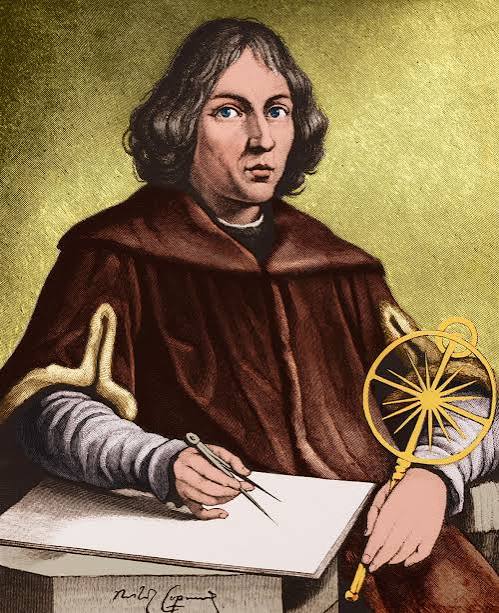
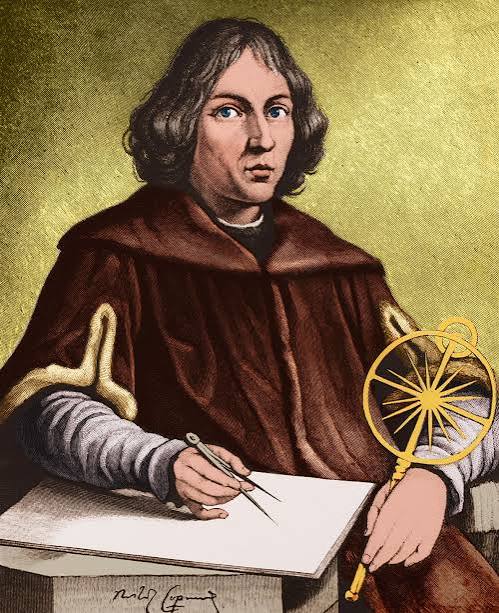
The scientific revolutionary Copernicus lived the simple life of a low-ranking priest and a bishop’s personal physician in a northern Polish city. However, his correspondence does suggest he had one scandalous secret: he was likely living with his lover.
Sources
Freely, John. Celestial Revolutionary: Copernicus, The Man, and His Universe (London: I.B. Tauris, 2014).
Repcheck, Jack. Copernicus’ Secret: How the Scientific Revolution Began (Simon & Schuster, 2007).
Turning Modern is a one-person production, so support is always welcome. You can contribute through Patreon or Ko-Fi.
Transcript
In northern Poland, a low-ranking member of the clergy was destined to change how humanity understood the universe, proving once and for all that the Earth revolved around the sun rather than the other way around…although he still thought the Earth was the center of the universe. Especially compared to the impact his life would have, he lived quietly and unassumingly, appropriately enough for a man of the cloth. Yet, his astronomical hypotheses were not the only way Copernicus managed to cause a stir. Much to the consternation of his superiors, Copernicus almost certainly was living with the love of his life despite being a priest.
This is Turning Modern.
The man who you probably know as Copernicus was born as Nicolaus Copernik in 1473. His father was a copper merchant who moved south from the Baltic port city of Gdansk, also known as Danzig, to the bustling city of Torun. There he met and eventually married Barbara, the daughter of a local wealthy merchant. The couple would have four children, the youngest of whom was Copernicus. When Copernicus turned ten, his father died. His mother’s brother, Lucas Waczenrode, stepped in to pay for Copernicus’ education, which culminated in Copernicus becoming a student in Italy at the height of the Renaissance. Copernicus’ interests were far-reaching. He not only studied canon law, eventually earning his doctorate in that field from the University of Ferrara, but he also spent several years studying medicine at the University of Padua. After completing his doctorate, Copernicus returned to Poland. He ended up in Warmia, a region of northern Poland, where his uncle Lucas had become Warmia’s bishop. There, he was appointed as a canon, a type of priest who didn’t take full priestly vows, and he was given a post at the city of Frombork. As part of his position he was given a small house just outside the cathedral.
Copernicus’ new home of Warmia had a complicated history. The region was once the home to the original Prussian people. The Prussians’ staunch paganism made them an easy target for their Christian neighbors, culminating in the Baltic Crusades. As crusaders came to save their souls and more importantly help themselves to their lands, the entire region was colonized by German-speaking peoples. Warmia itself became a semi-independent territory ruled by its bishop, but it was under the sovereignty of the Order of the Teutonic Knights. However, by the fifteenth century the land became bitterly and violently contested between the Teutonic Knights and the Kingdom of Poland. While Warmia kept its semi-autonomy, it became a part of the Kingdom of Poland. During one war between Poland and the Teutonic Knights, Copernicus helped organize the defenses of Warmia’s capital, Olsztyn, and was a member of the Polish delegation that discussed peace terms.
On top of his duties as a canon, Copernicus also served as the personal physician of his uncle and, after his death, the men who succeeded him as Bishop of Warmia. Of course, Copernicus spent much of his free time observing the motions of celestial bodies. Even long before he tried openly publishing his theories about the Earth orbiting the sun, he was on the list of experts consulted by Pope Leo X on the subject of calendar reform, an effort that decades after Copernicus’ death would finally lead to the introduction of the Gregorian calendar used today. But like when he was a student Copernicus did not stick to one discipline. In fact, his first known writing was not about astronomy at all. Instead, in 1509 he wrote a Latin translation of the epistles of a seventh-century Greek writer, Theophylactus Simocatta. Drawing on his experiences as a church administrator, in 1517 Copernicus wrote “Essay on the Coinage of Money.” It was an early explanation of what would become known as Grisham’s Law, a principle of economics holding that debased coinage always drives pure coinage out of circulation. By that point, Copernicus’ studies had already made him something of a celebrity.
However, Copernicus did have a secret that had the potential to lead to scandal. It was not uncommon for the canons to employ women, usually their own relatives, as housekeepers. Copernicus too had a housekeeper, named Anna Schilling. By 1531, Copernicus’ superior, Fabian von Lossainan, became convinced that Anna was not Copernicus’ housekeeper, but his lover.
Like too many women in history, we know little about Anna herself, and most of it comes from the flurry of letters between Copernicus, his fellow priests, and his superiors. Her father was a Dutch man named Arend van der Shelling who settled in Gdansk and changed his name to the more Germanic-sounding Schilling. She married a distant relative of Copernicus’, whose name has been lost. At some point, on the grounds of his alleged impotence, Anna got the Church to recognize them as separated, a situation that allowed Anna and her husband to live separately but left them unable to legally remarry. Whatever their situation, Anna owned her own house in Frombork. She was also an intelligent, educated woman who apparently shared Copernicus’ interest in astronomy.
Beyond that, the facts have to give way to speculation. From the letters it seems possible if not likely that Anna at least had enough financial means that she could move around independently. Yet as we’ll see Copernicus does claim that she was employed elsewhere as a housekeeper. Still, it may have been that the arrangement was just a discreet way of covering the fact that she and Copernicus were in a relationship. It didn’t help that in their letters Copernicus’ superiors referred to her in Latin as a focaria, a term that could mean either domestic servant or concubine.
By 1537 she is first mentioned in Fabian’s letters to Copernicus. Since the bishops of Warmia lived in the far-away capital of Lidzbark, Fabian and his successors tried to deal with the Copernicus situation by mail. Fabian’s main concern seems to have been that Copernicus was living with any woman separated from her husband. Copernicus wrote back a letter dripping with apologies: “With due expression of respect and deference, I have received your most Reverend Lordship’s letter. Again you have deigned to write to me with your own hand, conveying an admonition at the outset. In this regard I must most humbly ask your Most Reverend Lordship not to overlook the fact that the woman about whom your Most Reverend Lordship writes to me was given in marriage through no plan or action of mine. But this is what happened. Considering that she had once been my faithful servant, with all my energy and zeal I endeavored to persuade them to remain with each other as respectable spouses. I would venture to call upon God as my witness in this matter, and they would both admit it if they were interrogated. But she complained that her husband was impotent, a condition which he acknowledged in court as well as outside. Hence my efforts were in vain…However, with reference to the matter, I will admit to your Lordship that when she was recently passing through here from the Krolewiec fair with the woman from Elblag who employs her, she remained in my house until the next day. But since I realize the bad opinion of me arising therefrom, I shall order my affairs that nobody will have any proper pretext to suspect evil of me thereafter, especially on account of your Most Reverend Lordship’s admonition and exhortation.” Despite the submissive and apologetic tone, Anna stayed with Copernicus.
Fabien did not press the matter until his death six years later. His successor as bishop, Johannes Dantiscus, would not be as lenient. This was despite the fact Dantiscus himself once had a lover, Isabel Delgada, with whom he had a daughter named Juana. Maybe in another world Dantiscus would have turned a blind eye. However, Copernicus’ domestic bliss was under the shadow of the Reformation. Protestantism was making inroads into Poland from Germany. During Copernicus’ lifetime and close to his own backyard, in 1525 the Headmaster of the Tuetonic Order, Albert of Hohenzollern, secularized the territories of the Teutonic Knights and took the title of Duke of Prussia as a vassal of the Polish king. This made Duke Albert the first Protestant head of state in history. Maybe we’ll hear from Prussia again over the course of the show.
All this made Copernicus’ relationship with Anna a sore spot since one of the most potent attacks Protestants waged against the Catholic Church was their assault on priestly celibacy. Martin Luther himself married, and many monks, nuns, and priests who defected to Protestantism followed suit. So, unsurprisingly, Catholics liked to accuse former clerics of embracing Protestantism just because it gave them permission to satisfy their lusts. This, along with potent Protestant propaganda filled with allegations of decadent clerics, made church leaders like Dantiscus especially wary of their subordinates’ behavior. Dantiscus was not in office long before wrote to Copernicus, urging him to kick Anna out of his house. Copernicus wrote back, promising that he would comply, just that he needed time to make arrangements for Anna elsewhere. Copernicus may have been hoping that he would let the matter drop like his predecessor did. If so, he was wrong. He again wrote to Copernicus, demanding that Copernicus send Anna away as soon as possible. In November of 1538, Copernicus wrote back: “Although I wanted to do what you advised, nonetheless it was not easy to find a proper female relative forthwith, and therefore I intended to terminate this matter by the time of the Easter holidays. Now, however, lest your Most Reverend Lordship suppose that I am looking for an excuse to procrastinate, I have shortened the period to a month, that is, to the Christmas holidays, since it could not be shorter, as your Most Reverend Lordship may realize. For as far as I can, I want to avoid offending good people, and still least your Most Reverend Lordship.” New Year’s Day of 1539 came and went, and…Anna was gone. Copernicus wrote to Dantiscus, swearing that he had complied and Anna had left for good. Well, not exactly. Dantiscus was soon informed that she still lived in Frombork and visited Copernicus regularly.
Dantiscus could not let the matter go then due to one other problem: two other canons were also involved with women. One of them, Alexander Sculteti, was a close friend of Copernicus, so Dantiscus actually thought that Alexander had been a bad influence on Copernius. No wonder, since it was reported to Dantiscus that Alexander was not only living with his mistress, but with the son they had together. On top of all that, Dantiscus suspected that Alexander was secretly harboring Protestant sympathies.
It seems that Dantiscus was reluctant to move too harshly against Copernicus, who was after all his celebrity canon. Still, Copernicus’ stubbornness forced his hand. Dantiscus wrote a much sterner letter, one that he ordered to be read before a gathering of all the canons. One of the canons, Felix Reich, was also a close friend of Copernicus’, so when he received the bishop’s letter he sent it back, writing that it needed to be reworded. When a corrected letter from the bishop came, Felix simply sent the letter back again, pointing out that the bishop’s scribe had gotten Alexander’s name wrong. After the letter came back a third time, Felix apologetically wrote back that unfortunately the letter arrived at a time when there weren’t enough of the canons present to constitute a quorum so they couldn’t hold an official meeting.
One has to respect such a friend, but unfortunately Felix passed away shortly after he played defense for Copernicus, in March of 1539. Dantiscus once again put his foot down and tried to banish the women he called in one letter the “Frombork wrenches”, but it seems Copernicus kept meeting with Anna while Alexander hid his mistress in his home. Unfortunately, Copernicus would not have his co-conspirator and wingman around for long. The next year, Alexander would be tried before King Sigismund of Poland himself for heresy and found guilty. Banished from Poland, Alexander took his mistress and their son and left for Rome, where he had powerful allies in the Church. They managed to secure Alexander’s acquittal. However, while he was in Rome Alexander’s quarters were searched and Protestant writings were found with marginal notes written in Alexander’s handwriting. Alexander was retried and imprisoned. Years later he would be released and reinstated as a canon, but he would never again return to Frombork.
Meanwhile Copernicus finally had to relent once Dantiscus got someone closer to home, the Bishop of Kulm, to personally talk to Copernicus and make sure he ended his relationship with Anna. It’s difficult to know what happened and when based on the letters alone, but it seems that, finally, by the spring of 1539, even Anna’s visits to Copernicus came to an end. Dantiscus would later claim that he somehow managed to get Anna legally banished from Frombork. No doubt he did go that far, but the Bishop of Kulm would claim in a letter to Dantiscus that he convinced Copernicus to stop seeing Anna on his own. Perhaps Dantiscus was just covering his bases.
Whatever Anna meant to Copernicus, he had lost her along with his closest friends in just the span of a couple of years. He would die from apoplexy not long afterward on May 24 1543. By that time he had just finished his masterpiece, the book On the Revolutions of the Heavenly Spheres. He spent his last months with no idea that his book would change the world and give an entire era of science his name. In fact, as Copernicus admitted in his book’s dedication, he thought that his ideas would be mocked and shouted down, and it took the urging of his friends and admirers to convince him to try to have his theories published. “When I weighed these things in my mind, the scorn which I had to fear on account of the newness and absurdity of my opinion almost drove me to abandon a work already undertaken,” Copernicus recounted. Those months where Copernicus dreaded the failure of his life’s work and during which he experienced failing health, he also spent without Anna and with his closest friends either dead or far from Poland.
As for Anna herself, we only know that she had been living in Gdansk at the time of Copernicus’ death. Afterward she returned to Frombork, and it was noted that she would visit Copernicus’ old house and tended to the property. Even this was too much for Dantiscus. He ordered the canons to keep her from ever entering the house again. We do not know if they followed this order. And, with that, Anna disappears from our view.
Thank you for listening.

